




Diken news
Mastering the Basics of Rough Terrain Forklifts: Essential Insights for Industry Professionals
Release time: 2025-03-27
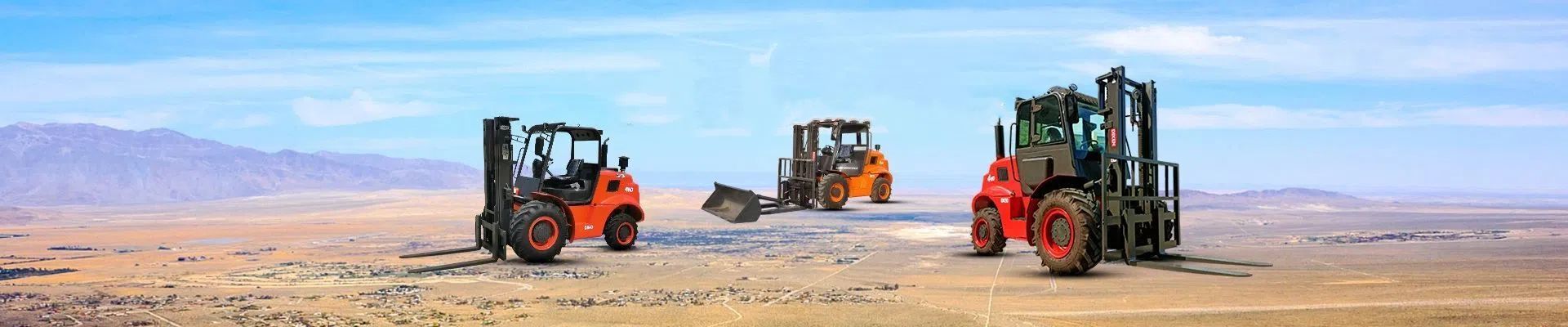
Rough terrain forklifts are essential vehicles designed to operate in challenging outdoor environments, particularly on uneven surfaces such as construction sites, farms, and off-road locations. These forklifts stand out due to their robust construction, powerful engines, and specialized tires that provide superior traction and stability. Understanding the characteristics and applications of rough terrain forklifts can significantly benefit professionals in the transportation and warehousing sectors.
One of the defining features of rough terrain forklifts is their enhanced mobility. Equipped with larger, more durable tires, these forklifts are designed to navigate rocky, muddy, or hilly terrains that standard forklifts may find difficult to traverse. The high ground clearance further prevents the machine from getting stuck or damaged while operating on uneven ground, making them an invaluable asset in construction and landscaping scenarios.
In addition to mobility, rough terrain forklifts typically come with advanced lifting capabilities. They are engineered to lift heavy loads, often exceeding that of conventional forklifts, which is crucial in industries where heavy materials need to be transported over rough surfaces. The lifting capacities can vary significantly between models, so it is essential for professionals to assess their specific operational needs and choose the appropriate forklift that aligns with their load requirements.
Another critical aspect to consider is the stability of rough terrain forklifts. Many models are equipped with four-wheel drive systems that ensure optimal traction and control, reducing the likelihood of tipping over. This feature is particularly important when handling loads on sloped or uneven surfaces. Additionally, a well-designed counterweight system helps maintain balance, further enhancing safety during operation.
When it comes to maintenance, rough terrain forklifts require regular inspections and servicing. Their exposure to harsh environments means that components such as tires, hydraulic systems, and engines may experience wear and tear more quickly than those of standard forklifts. Industry professionals should develop a proactive maintenance schedule to ensure the longevity and reliability of their equipment.
Lastly, understanding the specific applications of rough terrain forklifts can aid in maximizing their efficiency. These forklifts are not just limited to construction; they can also be used in agricultural settings, forestry, and even in certain warehousing operations where outdoor accessibility is required. Their versatility makes them suitable for various tasks, from lifting and transporting materials to handling pallets in rugged locations.
In conclusion, rough terrain forklifts play a crucial role in enhancing operational efficiency in challenging environments. By understanding their unique features, stability measures, maintenance needs, and various applications, industry professionals can optimize their use and improve their overall logistics and warehousing operations.
Keywords: rough terrain forklift




Shandong Diken Heavy Industry Co., Ltd. is a professional manufacturer of cross-country material handling equipment in China. We are located in Shandong Province, China, specializing in the manufacture of handling and loading equipment suitable for agriculture
Contact Information
Starting from the west section of Taishan Street, Daiyue District, Tai'an City, Shandong Province
Business license