




Diken news
Comparing 2 Ton Off Road Forklifts: Essential Features and Considerations
Release time: 2026-06-03
Comparing 2 Ton Off Road Forklifts: Essential Features and Considerations
Table of Contents
- 1. Introduction to Off-Road Forklifts
- 2. Understanding Specifications of 2 Ton Off-Road Forklifts
- 3. Key Features to Look For
- 4. Performance Factors of Off-Road Forklifts
- 5. Safety Considerations When Choosing a Forklift
- 6. Cost Analysis: Value for Money
- 7. Brand Reputation and Customer Service
- 8. Common Issues with 2 Ton Off-Road Forklifts
- 9. Conclusion
- 10. Frequently Asked Questions
1. Introduction to Off-Road Forklifts
In the realm of heavy-duty machinery, 2-ton off-road forklifts stand out as essential tools for transporting materials across uneven terrains. These specialized forklifts are engineered to perform in environments where standard forklifts may falter, making them indispensable for construction sites, lumber yards, and agricultural settings. Understanding what to look for in these vehicles is critical for ensuring both efficiency and safety.
2. Understanding Specifications of 2 Ton Off-Road Forklifts
When choosing a 2-ton off-road forklift, it is vital to understand its specifications. This section will cover the key specifications that impact performance and usability.
Weight Capacity and Load Stability
The primary consideration is the weight capacity, which in this case is 2 tons (approximately 4,000 pounds). It is essential to ensure that the forklift can handle your specific loads while maintaining stability. Look for forklifts with a low center of gravity, as this significantly contributes to safer lifting operations.
Lift Height and Reach
The lift height refers to how high a forklift can raise a load. For off-road applications, a lift height between 10 to 15 feet is common. Evaluating reach is equally important; a forklift with an extended reach can effectively handle loads in tight spaces.
Engine Type and Power
Two primary engine types are found in 2-ton off-road forklifts: diesel and LPG (liquefied petroleum gas). Diesel engines offer greater power and fuel efficiency, making them suitable for prolonged use in rugged conditions. LPG engines, while cleaner, may not provide the same level of torque but are often easier to maintain.
Tires and Traction
Tire design is paramount for off-road applications. Look for forklifts equipped with rugged, non-marking tires that provide excellent traction on various surfaces. Additionally, consider if the forklift has 4-wheel drive capabilities, which can enhance maneuverability on uneven terrain.
3. Key Features to Look For
Apart from specifications, several key features can enhance the usability of 2-ton off-road forklifts.
Operator Comfort
Operator comfort should not be overlooked. A spacious, ergonomic operator cab with adjustable seating and controls can significantly reduce fatigue, leading to improved productivity. Features such as climate control and good visibility also contribute to a better working environment.
Durability and Build Quality
Off-road forklifts are subjected to harsh conditions; thus, durability is a critical feature. Look for models built from high-strength steel with reinforced frames. This construction not only ensures a longer lifespan but also enhances safety.
Versatility and Attachments
The ability to use various attachments, such as forks, clamps, and buckets, can increase the versatility of your forklift. This adaptability can make a significant difference in performing multiple tasks on the job site.
4. Performance Factors of Off-Road Forklifts
Understanding the performance of a forklift in real-world conditions is crucial for making an informed decision.
Speed and Agility
The speed of an off-road forklift can affect productivity. Although most off-road forklifts prioritize stability over speed, it is essential to choose a model that balances both for effective operations.
Fuel Efficiency
Fuel efficiency is another crucial performance factor. Given the often remote locations where these forklifts operate, lower fuel consumption can lead to significant cost savings over time.
Maintenance Requirements
Regular maintenance is critical for all heavy machinery. Assess the maintenance requirements and intervals for the forklifts you are considering. Models that are easy to service can save you time and money in the long run.
5. Safety Considerations When Choosing a Forklift
Safety should be at the forefront of any purchasing decision regarding heavy machinery.
Safety Features
Look for forklifts equipped with safety features such as emergency brakes, stability control, and load management systems. Additionally, an automatic shut-off feature can prevent accidents in case of operator error.
Training and Certification
Ensuring that operators are properly trained and certified is equally important. An informed operator can utilize the forklift efficiently and minimize the risk of accidents.
6. Cost Analysis: Value for Money
The cost of purchasing a 2-ton off-road forklift varies significantly depending on features and specifications.
Initial Purchase Cost
Consider your budget when evaluating initial purchase costs. While it may be tempting to opt for cheaper models, investing in a quality forklift can lead to better performance and durability.
Long-Term Costs
In addition to the purchase price, consider long-term costs such as maintenance, fuel, and insurance. A comprehensive cost analysis will help you determine the true value of your investment.
7. Brand Reputation and Customer Service
The brand of the forklift plays a crucial role in its reliability and performance.
Researching Brands
Conduct thorough research on various brands specializing in off-road forklifts. Look for customer reviews, testimonials, and case studies to gauge brand reputation.
After-Sales Support
Assess the after-sales support offered by the manufacturer. Reliable customer service can make a significant difference, especially when dealing with maintenance issues or acquiring spare parts.
8. Common Issues with 2 Ton Off-Road Forklifts
Even the best forklifts can encounter issues over time.
Mechanical Failures
Be aware of common mechanical failures, such as hydraulic leaks or engine problems. Understanding these issues can aid in preemptive maintenance and repair.
Operator Error
Operator error is one of the leading causes of accidents involving forklifts. Investing in training can lead to safer operations and reduce the likelihood of errors.
9. Conclusion
Choosing the right 2-ton off-road forklift is a significant decision that can impact the efficiency and safety of your operations. By understanding the specifications, key features, performance factors, and safety considerations, you are better equipped to make an informed choice. Prioritize quality, durability, and user comfort to ensure that your investment pays off in the long run.
10. Frequently Asked Questions
Q1: What is the average lifespan of a 2-ton off-road forklift?
A: With proper maintenance, a 2-ton off-road forklift can last between 10 to 15 years.
Q2: Are off-road forklifts suitable for indoor use?
A: While designed primarily for off-road conditions, some models can be used indoors depending on their tire type and design.
Q3: How often should I service my forklift?
A: Regular servicing every 200-250 operating hours is generally recommended, along with a thorough annual inspection.
Q4: Can I use attachments with my 2-ton off-road forklift?
A: Yes, many 2-ton off-road forklifts can accommodate various attachments, enhancing their versatility.
Q5: Is operator training necessary for using a forklift?
A: Yes, proper operator training is crucial for safety and efficiency when using a forklift.
Keywords: 2 ton off road forklift
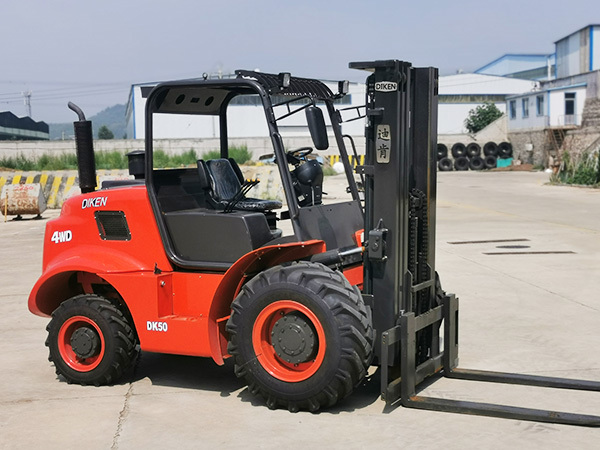



Shandong Diken Heavy Industry Co., Ltd. is a professional manufacturer of cross-country material handling equipment in China. We are located in Shandong Province, China, specializing in the manufacture of handling and loading equipment suitable for agriculture
Contact Information
Starting from the west section of Taishan Street, Daiyue District, Tai'an City, Shandong Province
Business license